Source vintage electric moped for delivery, commuting, and leisure
Explore 30 listings of vintage electric moped options featuring steel frames, lithium batteries, and varying power outputs from 501W to 2000W. Buyers can compare specifications like tire sizes, foldability, and certifications including CE and EEC to find suitable models for various needs.
Key considerations
Products List






Comprehensive Sourcing Guide
Strategic Sourcing Guide for Vintage-Style Electric Mopeds
Understanding the Vintage Electric Moped Market Segment
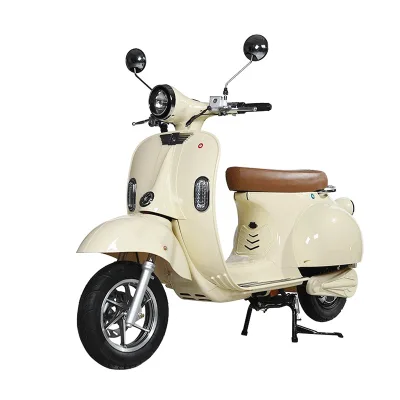
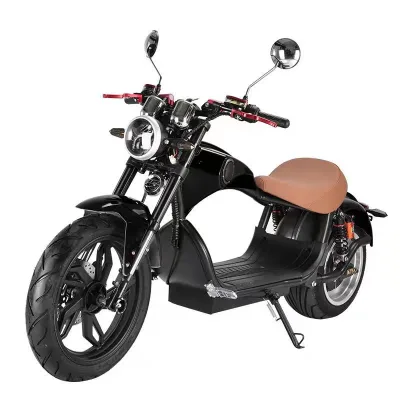
The vintage electric moped category represents a convergence of retro aesthetic appeal and modern electric propulsion technology. Buyers in this sector are often seeking vehicles that mimic the silhouette of mid-20th-century motor scooters while utilizing contemporary battery and motor systems. The core appeal lies in the "classic" look, often characterized by rounded fenders, chrome accents, and step-through frames, adapted for urban mobility. When sourcing these vehicles, it is critical to distinguish between genuine vintage restorations and modern manufacturing designed to evoke a nostalgic style. The supply chain for these units is heavily concentrated in China, with significant manufacturing hubs identified in Jiangsu, Shandong, and Zhejiang provinces. These regions offer a mature ecosystem for electric two-wheeler production, ranging from small-batch customizers to large-scale OEMs capable of handling complex assembly requirements.
Buyers must recognize that the term "vintage" in this context is primarily a design language rather than a historical classification. The underlying technology is modern, featuring brushless motors and lithium battery systems. The sourcing process requires a clear definition of the desired aesthetic versus the functional performance requirements. While the visual design may suggest a specific era, the electrical architecture must meet current safety and performance standards. The market offers a wide range of configurations, from single-speed models to those with multiple gear ratios, and from foldable frames to rigid, non-foldable structures. Understanding these variations is the first step in defining a precise procurement specification that aligns with the intended use case.
Technical Specifications and Performance Parameters
When evaluating vintage-style electric mopeds, the technical specifications often vary significantly between different product models, even within the same aesthetic category. The power output is a primary differentiator, with observed ranges spanning from 501 to 1000 watts up to 1001 to 2000 watts. This variance directly impacts top speed and acceleration capabilities. For instance, specific models in the supply chain have been observed with motor power ratings of 1200W, delivering speeds up to 55 km/h. The motor type is predominantly brushless, which offers higher efficiency and longevity compared to brushed alternatives.
Battery technology is another critical specification. The majority of modern vintage-style units utilize lithium batteries, though some configurations may offer lead-acid options. Battery capacity is a key determinant of range, with some observed units boasting a range per power of greater than 60 kilometers. The voltage systems are typically standardized, with 72V being a common configuration for higher-performance models. Tire sizes also vary, with 10-inch and 12-inch tires being frequently observed specifications. The choice of tire size influences the ride comfort and the overall footprint of the vehicle.
Frame construction is essential for both durability and the vintage aesthetic. Materials observed in the supply chain include steel and stainless steel, providing a balance between weight and structural integrity. The frame material choice also affects the packing method; some units are shipped with steel frames in standard cartons, while others utilize iron frame packing or integrated packaging for SKD (Semi-Knocked Down) and CKD (Completely Knocked Down) shipments. Foldability is a distinct feature that separates urban commuters from stationary delivery units. While some models are designed as non-foldable units with a fixed wheelbase of 1390mm, others offer foldable mechanisms to facilitate storage in compact spaces. Ground clearance is another specification to verify, with observed values around 150mm, which affects the vehicle's ability to navigate uneven urban surfaces.
Compliance, Certification, and Regulatory Standards
Navigating the regulatory landscape is paramount when importing vintage electric mopeds. The supply chain data indicates a robust array of certifications held by manufacturers, which serves as a proxy for quality and compliance. Common certifications observed include CE, EEC, DOT, COC, EPA, CQC, ISO, and ENEEC. The presence of these certifications suggests that the manufacturers are capable of meeting various international standards, though buyers must verify that the specific batch of goods carries the relevant documentation for their target market.
The EEC (European Economic Community) certification is frequently cited, indicating compliance with European safety directives. Similarly, the CE mark is a mandatory conformity marking for products sold within the European Economic Area. For markets in North America, the DOT (Department of Transportation) and EPA (Environmental Protection Agency) certifications are critical. The inclusion of ISO standards suggests adherence to quality management systems, while CQC and COC indicate compliance with Chinese and other regional quality control standards. Buyers should not assume that a supplier holding these certifications for one model applies them to all products in their catalog. Verification of the specific certification for the ordered model is necessary to ensure legal importability.
In addition to product certifications, packaging standards are relevant for logistics and safety. Observed packaging standards include specific dimensions such as 18407001100mm and 16807001020mm, which are crucial for calculating shipping volumes and container utilization. Some models adhere to a standard of 1140x440x1160mm, while others are packed in metal frames to prevent damage during transit. Understanding these physical constraints helps in planning the logistics chain and estimating freight costs accurately.
Cost Drivers and Pricing Dynamics
The pricing of vintage electric mopeds is influenced by a complex interplay of factors, including power output, battery capacity, material quality, and certification status. The observed price range in the market spans from $57 to $1,380 USD. This wide disparity reflects the diversity in specifications and the target market segments. Lower-priced units typically feature lower wattage motors, lead-acid batteries, and simpler steel frames. In contrast, higher-priced models often incorporate lithium batteries, higher power outputs (1001-2000W), and premium materials like stainless steel.
Minimum Order Quantity (MOQ) is another significant cost driver, with observed ranges from 1 to 100 units. Buyers seeking small quantities may face higher per-unit costs or limited customization options, while larger orders can leverage economies of scale. The customization availability is a key factor in pricing; models offering customized colors or specific branding (such as the "Youyuan" brand observed in the data) may command a premium. Additionally, the packing method affects the final cost. Integrated packaging or SKD/CKD options, while convenient for assembly in the destination market, may incur higher initial unit costs compared to fully assembled units shipped in standard cartons.
Lead times and shipping logistics also contribute to the total cost of ownership. While specific lead times are not provided in the source data, the complexity of the product, such as the presence of 3-wheel configurations versus 2-wheel models, can impact production scheduling. The origin location, whether Jiangsu, Shandong, Zhejiang, or Wuxi, can influence freight costs due to varying port access and regional logistics infrastructure. Buyers should factor in these variables when negotiating the final landed cost.
Typical Applications and Use Cases
Vintage electric mopeds serve a diverse range of applications, driven by their unique blend of style and utility. The primary use case is urban commuting, where the retro aesthetic appeals to consumers looking for a distinctive mode of transport that stands out from standard electric scooters. The non-foldable models with robust frames and higher power outputs are well-suited for daily city travel, offering a comfortable ride with sufficient range for typical urban distances.
Another significant application is in the delivery and logistics sector. The 3-wheel configurations observed in the supply chain, such as those with models like HP105E-D, are particularly advantageous for cargo transport. These vehicles offer enhanced stability and a larger payload capacity, making them ideal for last-mile delivery services in dense urban environments. The foldable models, with their compact dimensions, are better suited for shared mobility services or for users with limited storage space in apartments or offices.
The versatility of these vehicles extends to recreational use as well. The vintage design makes them popular for leisure rides in parks, boardwalks, and tourist areas. The availability of customized colors allows fleet operators to brand their vehicles for promotional purposes. Whether for personal mobility, commercial delivery, or recreational use, the specific application dictates the required specifications, such as battery capacity, motor power, and frame durability.
Supplier Evaluation and Quality Control
Evaluating suppliers in the vintage electric moped sector requires a rigorous approach to ensure product consistency and reliability. Buyers should prioritize suppliers who can demonstrate a comprehensive portfolio of certifications, including CE, EEC, and DOT, as these indicate a commitment to safety and regulatory compliance. The origin of the product, specifically from established manufacturing hubs like Jiangsu, Shandong, and Zhejiang, is a positive indicator of supply chain maturity.
Quality control should focus on the physical attributes of the vehicle. The frame material, whether steel or stainless steel, must be inspected for weld quality and corrosion resistance. The battery system requires verification of its type (lithium vs. lead-acid) and capacity to ensure it matches the advertised range. The motor performance, particularly the brushless motor's efficiency and the observed speed capabilities, should be tested against the specified wattage. Brake systems, such as the F/R disc brakes observed in some models, are critical for safety and must be inspected for responsiveness and durability.
Packaging integrity is another aspect of quality control. The use of metal frames or standard cartons should be verified to ensure the product arrives without damage. Buyers should also assess the supplier's ability to handle customization requests, such as color variations or branding, as this indicates flexibility and attention to detail. The presence of specific model numbers like N11, Y4-N1, and HP-I20 suggests a structured product line, which can be a sign of a well-organized manufacturing process.
Long-Term Procurement and Lifecycle Considerations
Sourcing vintage electric mopeds is not just a one-time transaction but a long-term partnership that requires consideration of the product lifecycle. The availability of spare parts, particularly for the motor, battery, and braking systems, is crucial for maintaining the fleet's operational efficiency. Buyers should inquire about the supplier's policy on after-sales support and the availability of replacement components.
The environmental impact of the battery disposal and recycling should also be addressed. Lithium batteries, while efficient, require proper disposal and recycling protocols. Suppliers who adhere to ISO and EPA standards are more likely to have established processes for managing end-of-life products. Additionally, the customization options, such as the ability to change colors or branding, allow for product evolution over time, ensuring the fleet remains relevant and aligned with market trends.
Finally, the scalability of the supply chain is a key consideration. As demand grows, the supplier must be able to increase production capacity without compromising quality. The observed MOQ ranges and the variety of models suggest that the market can accommodate both small and large orders. However, buyers should establish clear communication channels and contractual agreements to ensure consistent supply and quality over the long term. By focusing on these strategic aspects, buyers can build a resilient and sustainable procurement strategy for vintage electric mopeds.
FAQs
What certifications are available for vintage electric mopeds?
Available certifications include CE, EEC, DOT, COC, EPA, CQC, ISO, and ENEEC. Buyers must verify that the specific batch of goods carries the relevant documentation for their target market, as certifications apply to specific models rather than the entire supplier catalog.
Can I find foldable vintage electric moped models?
Yes, foldable models are available alongside non-foldable options. Some units feature a folded state for compact storage, while others maintain a fixed wheelbase of 1390mm, requiring buyers to select based on their specific storage and mobility requirements.
Which frame materials are used in these vehicles?
Frame materials observed include steel and stainless steel. These materials provide a balance between weight and structural integrity, with packing methods varying between standard cartons, iron frame packing, or metal frames depending on the specific model configuration.
What is the typical power range for these mopeds?
Power output ranges from 501 to 1000 watts up to 1001 to 2000 watts. Specific models may feature a 1200W brushless motor delivering speeds up to 55 km/h, directly impacting acceleration and top speed capabilities for urban commuting.
How are these mopeds packed for shipping?
Packing methods include steel frame with standard cartons, iron frame packing, and integrated packaging for SKD or CKD shipments. Observed packing dimensions vary, such as 1840*700*1100mm or 1680*700*1020mm, which are crucial for calculating shipping volumes.
Where are these vintage electric mopeds manufactured?
Manufacturing origins include Jiangsu, Shandong, Zhejiang, and Wuxi in China. These regions offer a mature ecosystem for electric two-wheeler production, with suppliers capable of handling complex assembly requirements and varying order quantities.
What battery types are used in these vehicles?
Battery types include lithium batteries and lead-acid batteries. Some configurations offer a range per power of greater than 60 kilometers, with voltage systems typically standardized at 72V for higher-performance models to ensure sufficient range.